
The Case for the Shared Platter
Why food in the middle of the table changes everything about the meal.
This post contains affiliate links. If you buy something through one, I may earn a small commission — at no extra cost to you. I only share things I genuinely use and love.
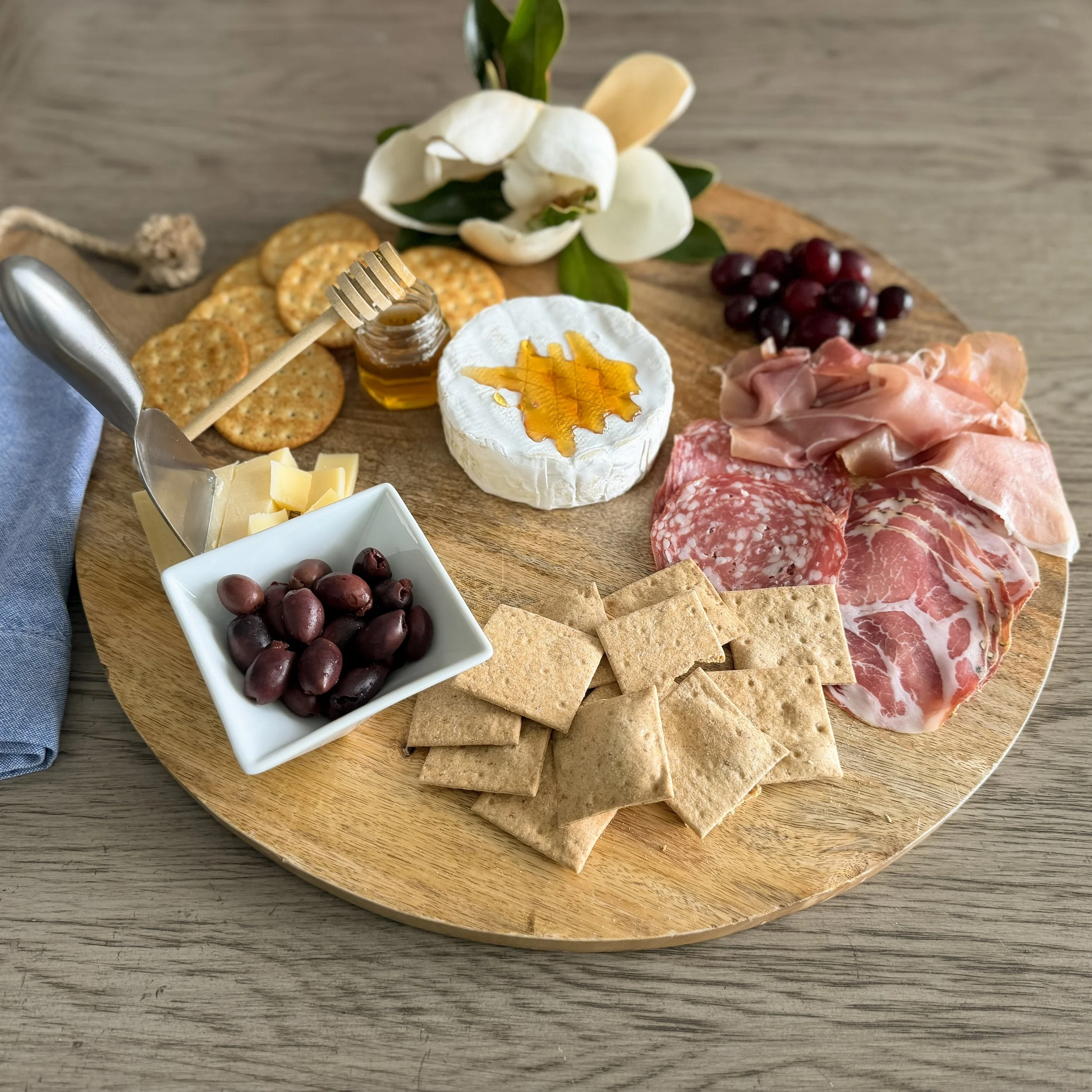
The board goes out before anyone arrives. Not because it needs to — it’ll be fine on the counter for another twenty minutes — but because there’s something about seeing it on the table that makes the whole afternoon feel like it was planned for. The honey. The prosciutto. The little bowl of something briny. It’s the simplest thing we do, and it’s the thing our people ask for every single time.
I’ve been setting out boards for years without thinking too hard about why it works. It’s not the food … the food is almost incidental. It’s the act of arranging something beautiful for people who aren’t there yet. The table set before the guests arrive is an act of welcome that happens before anyone walks through the door. The board is the first thing they see. It tells them: you were expected. You were thought of. Come in.
Here’s what changes when the food goes in the middle of the table instead of on individual plates: everyone slows down.
When dinner is plated, it arrives with a kind of urgency. There’s a thing in front of you and the expectation is that you eat it. The meal has a beginning and an end and a pace that’s been decided for you before you sit down. But when the food is in the middle, nobody’s keeping score. There’s no right moment to reach, no wrong amount to take. A friend pushes the honey toward someone else. Someone asks about the cheese. Somebody else reaches across without excusing themselves, and the table becomes looser, warmer, more itself.
The meal stops being a production and becomes a conversation. And conversations that happen over a shared platter go longer, because nobody is watching a plate go cold in front of them. There’s always one more thing to try. There’s always a reason to stay.
I won’t give you a formula, because a board built from a formula always looks like it was built from a formula. What I’ll give you instead is a framework — the one I come back to every time, regardless of the season or the occasion or what I had time to pick up.
One anchor. One fruit. One crunch. One sweet. One herb or bloom.
The anchor is your charcuterie or cheese — the thing with weight and salt and substance that everything else arranges around. The fruit is whatever is good right now, fresh or dried depending on the season. The crunch is crackers or crostini or something with texture that earns its place next to the anchor. The sweet is honey or jam or a few dark chocolates tucked into a corner. The herb or bloom is the thing that makes it look like it was cared for — a few sprigs of rosemary, a handful of grapes on the vine, a small stem of something from the yard. Whatever small gesture says someone thought about this.
In summer, it’s peaches and prosciutto and a wedge of something sharp, the board sticky with juice by the time everyone’s done. In fall, figs and aged gouda and a little pot of whole-grain mustard that always disappears faster than anything else on the board. There’s one we make in winter — brie with honey and cranberries, warm from the oven — that people have started requesting specifically. The ingredients change every season. The instinct doesn’t.
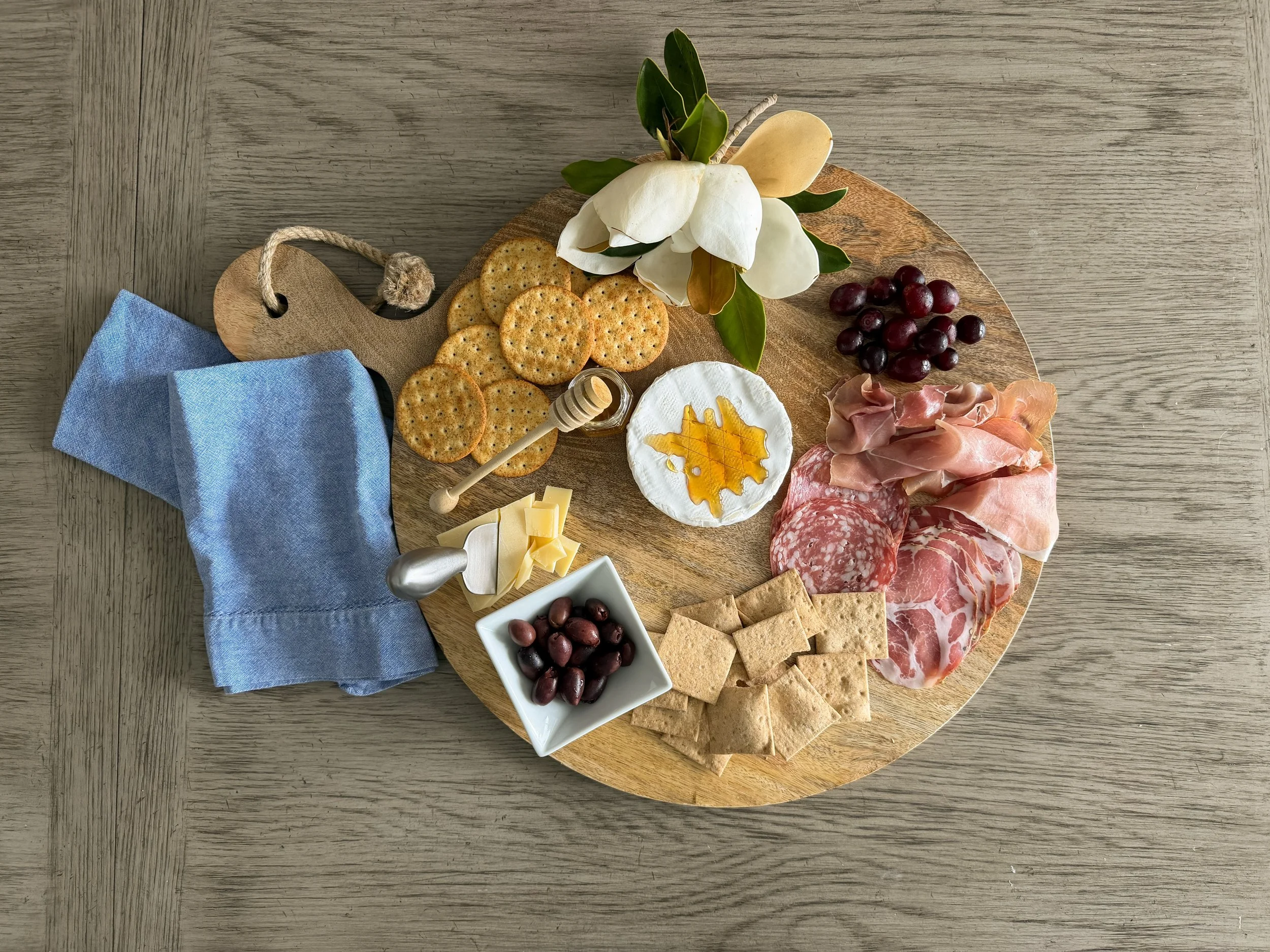
The board doesn’t require a specialty grocery store or a culinary skill set. It requires one surface, a few good things, and the willingness to not plate everything separately.
The thing that keeps people from setting out a board is an expectation of perfectionism – which three cheeses am I supposed to use? What fruit complements which cheese? Does this go with the dinner I’m serving or the bottle of wine I opened?
The board doesn’t have to be formulaic to do its job. I’ve set out boards that I was quietly proud of and boards that looked like I’d emptied a refrigerator drawer onto a cutting board, and both of them did exactly the same thing: they slowed the table down. They gave people something to reach for. They made the meal feel generous instead of efficient.
My kids love when we have a board for a meal. And for us, I don’t just save them for company or as an appetizer for dinner. Breakfast boards of cinnamon rolls with two kinds of eggs and a crunchy fruit. Dinner boards with deli meats and string cheese. Lunch boards with mozzarella pearls and sliced tomatoes. Movie night boards with popcorn and candy toppings. The options are endless.
The point is never the board. It’s what happens around it. The reaching. The sharing. The way someone passes the honey to the person who hasn’t tried it yet. The way dinner moves slower when there isn’t a plate in front of each person, demanding to be finished. The conversation that wouldn’t have happened over separate plates because nobody would have had a reason to stay at the table that long.
The board is just the permission structure. It’s the thing that says: we’re not in a hurry here. Linger. Have more. A few good things arranged with care are enough.
You don’t need a special occasion. You need a board and people you want to linger with.
The shared platter is the oldest hospitality instinct there is — food in the middle of the table, everyone reaching, nobody keeping track of time. It doesn’t require a recipe or a plan or a reason. It just requires the decision to put something beautiful in the center and let people gather around it.
Set out the board. See what the afternoon becomes.
