
The Shore as a Reset
What happens at the water’s edge — and why it stays.
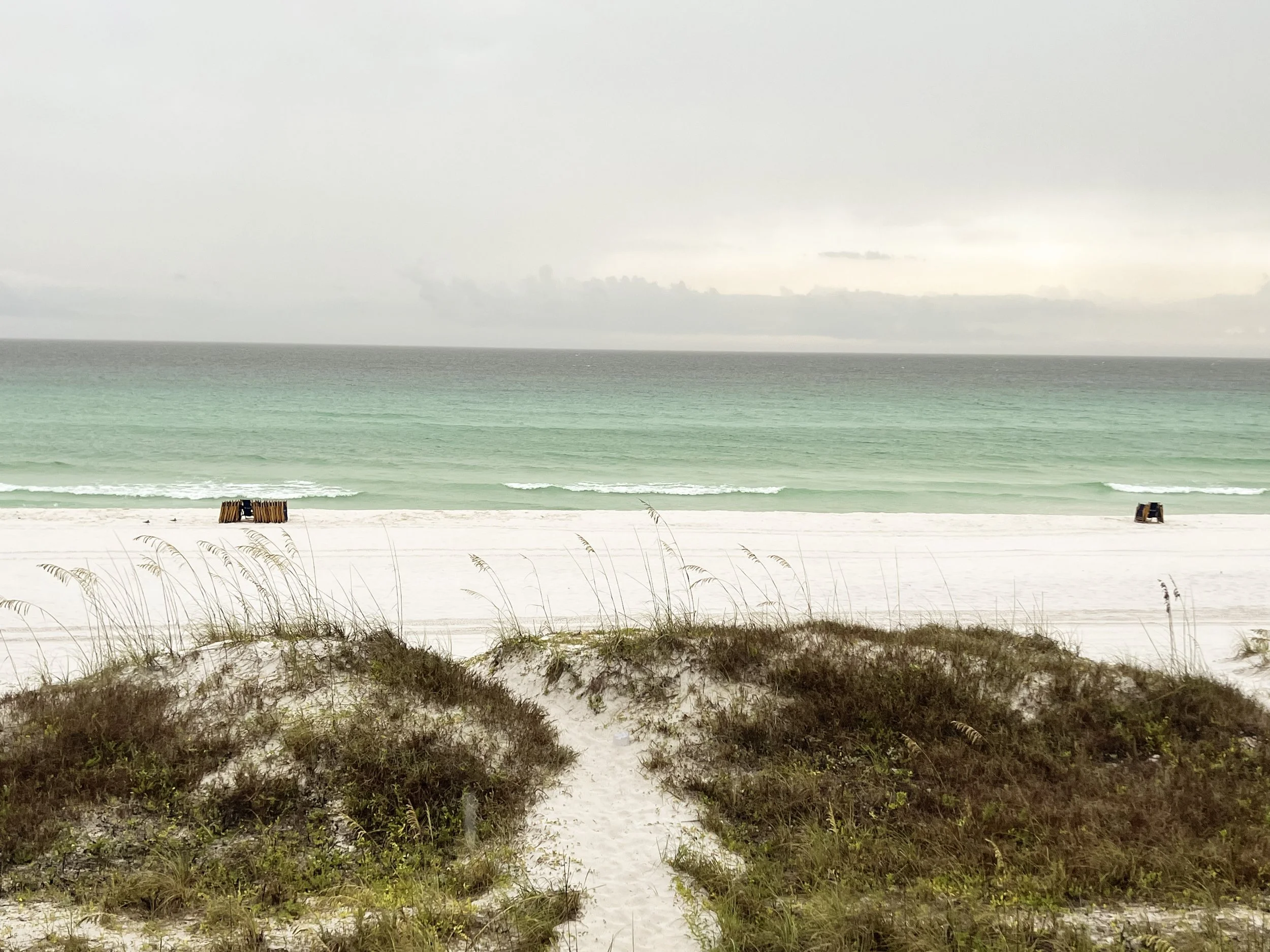
The first morning of every coast trip, I wake up earlier than I mean to and stand on the balcony with coffee I didn’t make, and I watch the water do exactly what it did yesterday and will do tomorrow, whether I am watching it or not. I let the sound of the waves roll over me – and I feel myself begin to change. This is the part of the trip where I start to feel the shift.
Not the first afternoon on the beach. Not the dinner out or the long walk at dusk or the cold drink in a warm chair. Those are all good. But it’s this — the first morning, the local coffee (because let’s be honest, I’m not drinking bad coffee, especially at the beach), the standing still while that beautiful emerald water rolls onto the white sandy shore and the salty beach breeze blows my hair across my face — that actually starts to reset something within me.
I began to understand years ago why this works. Why the shore works the way it does. Why I come back from the coast feeling like a different version of myself — slower, easier, less insistent on managing everything. I figured out that it isn’t mystical. It’s observable – and even scientific. The shore resets you for reasons you can actually name.
Why It Actually Works
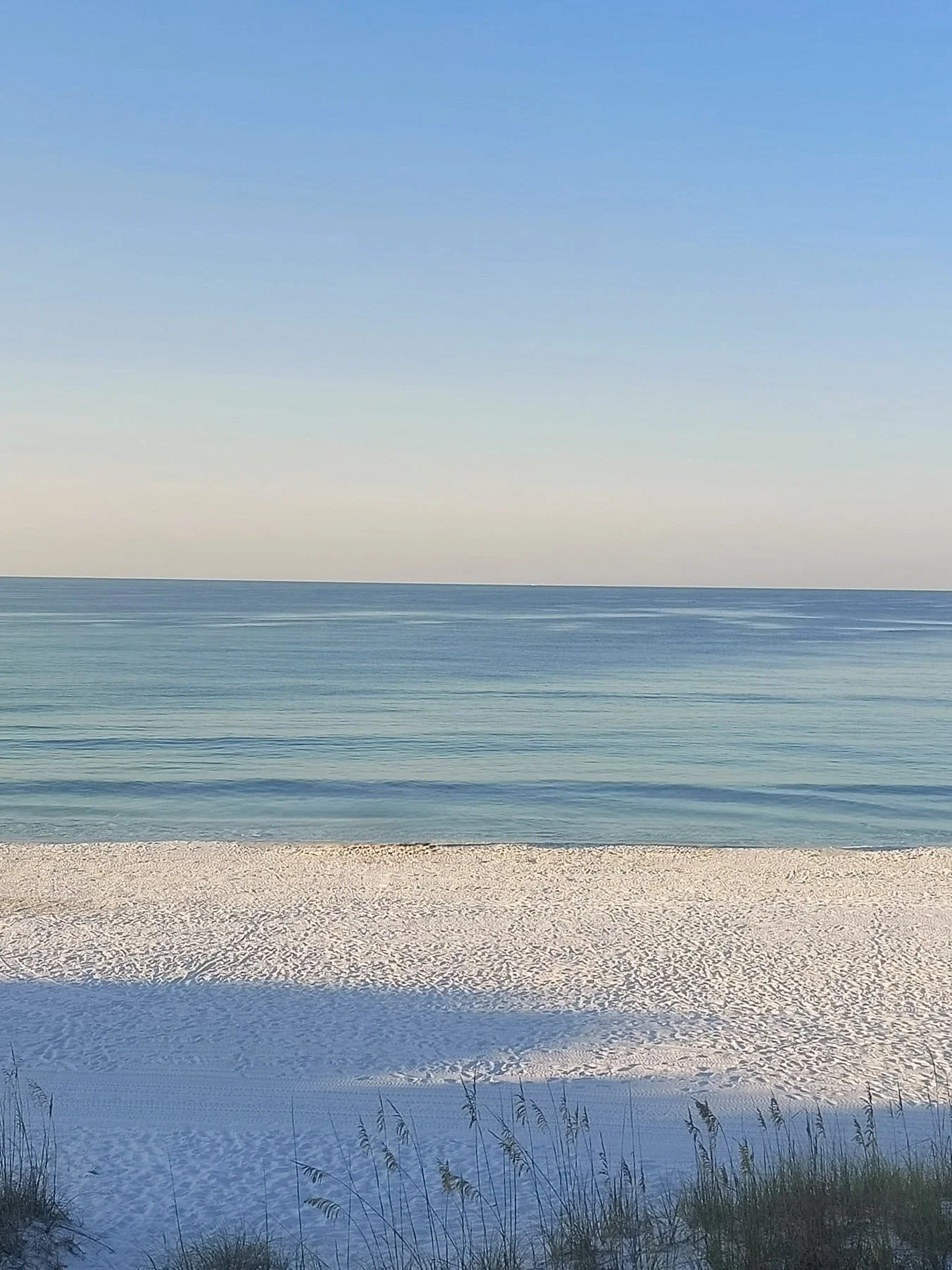
The horizon line is the longest uninterrupted sight line your eye encounters all year. Most of your life is spent looking at distances fifteen to thirty feet in front of you — across a room, across a desk, across a kitchen. The horizon breaks that open. Something in the nervous system responds to it the way it responds to a deep breath. You can’t rush what you’re looking at. The distance won’t cooperate.
The tide keeps time instead of you. You don’t decide when it comes in or goes out. You don’t manage it. It just happens, at its own pace, indifferent to your schedule. There is something deeply relieving about being in the presence of a rhythm that has nothing to do with you.
The phone signal is weaker – a bummer when you’re trying to stream music at the beach – but it’s impactful to the week. The reflexive reach, the background hum of being reachable — it quiets. Not just because you’ve made a decision to put the phone down, but because the environment makes it easier to forget it’s there.
At the shore, you stop being interesting to yourself. At home, the mind circles constantly — the list, the email, the thing you said, the thing you should have said differently. At the water, there’s too much happening quietly for the mind to spiral. The waves fill in the space where the circling usually lives.
And then there’s this:
The beach actually enhances our ability to absorb oxygen, raises our serotonin levels, decreases cortisol and lowers stress. It literally makes us feel better.
I’m not a doctor or a scientist, so you don’t have to take my word for it, but I find it fascinating — and I know how much better we feel when we’re by the ocean.
That Feeling without the Ocean
And while you can’t create that physical change at home (unless home is beachside for you, in which case, I’m totally jealous), you can capture some of what you’re craving, when you find yourself thinking about the beach in the middle of an ordinary Tuesday – that pace the shore imposes — and that pace doesn’t require an ocean.
Slower breathing. Longer looks at things that aren’t screens. Fewer demands competing for your attention at the same moment. A pace that belongs to the body instead of the calendar.
You can choose some version of this at home. A morning held slowly before anything asks anything of you — the kettle on, the phone on the counter, fifteen minutes that belong entirely to the quiet. A meal taken outside, with time on either side of it. An evening where the only plan is that there isn’t one.
You don’t have to be on the coast to live like you do.
The coast just makes it easier to remember that you want to. The work is bringing that knowledge home and holding onto it past the first week back.
What I Actually Bring Home
Not seashells. The kids collect those — my bathroom windowsill is a small museum of Gulf sand dollars and whelk shells and pieces of things they couldn’t leave behind.
What I bring home is a way of eating. Slower, shared plates in the middle of the table, no one checking anything. The coast has a way of making communal eating feel obvious rather than effortful, and I try to carry that home for at least a week before the ordinary week reasserts itself.
A way of dressing. Linen, unfussed, the kind of outfit you put on without looking in a mirror first. There’s a looseness to how you move in a linen dress or a worn chambray shirt that reminds you, physically, that you’re not performing anything right now. I try to keep reaching for that in the weeks after, even when I’m not anywhere near the coast. I’ll sit by the pool and imagine.
A way of holding the morning. One hour. Coffee. Nothing else. The same thing I try to do at home — but easier at the coast, where the house doesn’t ask anything and the light comes in at a different angle. The specific sadness of the drive home is useful data: what you’re leaving behind isn’t just a place. It’s the pace.
We head to 30A in a few weeks.
The trip hasn’t started, and it’s already working. Something has settled since the dates were marked on the calendar — a quiet knowing that the water is coming, that there will be a morning soon where I stand on a balcony with coffee I didn’t make and watch something move that doesn’t need me to manage it. Anticipation has its own reset quality. The shore starts working before you get there.
